Wholehearted Allegiance

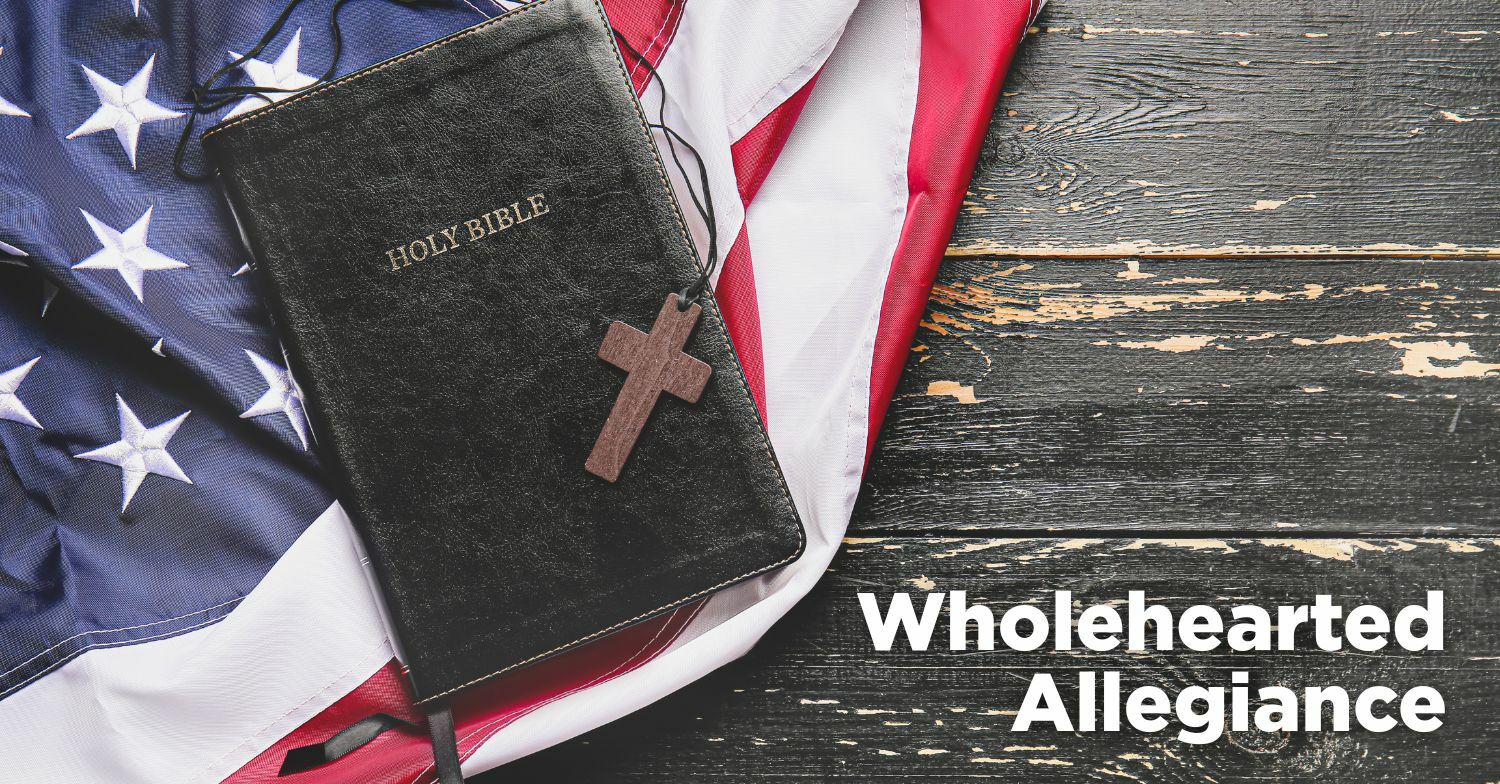
August is here, and with it, the steady movement toward a new season. Summer always seems to fly by, and while school hasn't started yet, we’re definitely feeling the transition. This will be the last newsletter before the school year begins, and as I’ve reflected on that, something has been stirring in my heart—a topic that may seem small to some, but I believe is worth deeper thought: the American flag in our sanctuary.
This conversation began among leaders at the beginning of the merger between Living Hope and Uncommon Church. One of the questions I raised was whether the flag should remain on stage. While there was a shared respect for what the flag represents, I asked if it belonged in the sanctuary. We decided to leave it in place until I could take time to explain my heart. What follows is the beginning of that conversation—one I hope we’ll continue together, with love and humility.
Let me begin by saying this clearly: I love our country. I’m thankful to be an American. I’m grateful for the freedoms we enjoy, for the opportunities we’re afforded, and for the men and women who’ve served and sacrificed in ways that make those freedoms possible. I pray regularly for our leaders and want the very best for our nation. But as your pastor, and as a follower of Jesus, I also believe we’re called to remember where our highest allegiance lies.
Jesus says in Matthew 22:37–40
“‘Love the Lord your God with all your heart and with all your soul and with all your mind.’ This is the first and greatest commandment. And the second is like it: ‘Love your neighbor as yourself.’ All the Law and the Prophets hang on these two commandments.’”
That kind of love—with all our heart, soul, and mind—is a call to complete and undivided allegiance. And not just emotional affection, but loyalty. Commitment. Surrender.
This is where our conversation about symbols begins to matter. When we gather for worship, we don’t gather primarily as Americans. We gather as citizens of the Kingdom of God. We stand under the cross—not under any flag. Our worship space should reflect that core identity clearly and fully. Our sanctuary is holy ground, and it should point unmistakably to Jesus and His Kingdom alone.
Why does this matter? Because Christian Nationalism is on the rise in our culture.This is the belief that the United States is inherently a Christian nation and that our faith and our national identity should be closely tied together. This is more than just patriotism. It’s a blending of cross and country in a way that can distort the mission of the Church.
Christian Nationalism implies that to be a good Christian is to be a certain kind of American—that our country is a unique instrument of God's will in a way others are not. This ideology, while often subtle, can lead to confusion about where our true allegiance lies. It can turn faith into a political identity and worship into a nationalistic expression. It’s not a new temptation—it’s as old as God’s people seeking kings like the nations around them—but it's one we must resist.
When we recite the Pledge of Allegiance, for instance, we are making a solemn promise of loyalty to the flag and the republic it represents. In the public sphere—like in schools or at civic events—this can be appropriate. But when we bring that same symbol into a space of worship, it can send a conflicting message. After all, the symbol of the Church is not a flag—it’s a cross. One represents a nation; the other represents the suffering love of Christ that redeems all nations.
Let’s be clear: this isn’t about dishonoring our country. In fact, I believe the more fully we live out our allegiance to Christ, the better citizens we become. When God fills us with His Spirit, we are empowered to serve, bless, and bring flourishing to every corner of life—including our families, our schools, our workplaces, and yes, our nation.
That’s why I believe we should lovingly and thoughtfully consider what our worship spaces communicate. Every symbol speaks. If we display both the cross and the flag side-by-side, it may subtly suggest that our loyalty to Christ and our loyalty to country are equal. They are not. One is eternal. The other is temporary. One commands our whole life. The other deserves our gratitude, but not our ultimate allegiance.
Jesus came not just to save individuals, but to usher in a new Kingdom. A Kingdom that stands in contrast to every earthly empire—whether Egypt, Babylon, Rome, or America. His Kingdom operates by different values, pursues different goals, and offers a different kind of power. It's a Kingdom built on mercy, justice, truth, and grace. And it invites people from every tribe, tongue, and nation to come and find life in Him.
So, my encouragement is this: Let’s keep our eyes on Jesus. Let’s align our hearts with His Kingdom. Let’s think deeply about what our worship says—not just in words, but in symbols, tone, and focus. Let’s be grateful for our country—but fully surrendered to our King.
If this article raises questions or stirs some discomfort, I’d love to talk more. This isn’t about stirring up division—it’s about fostering devotion. It’s about being a people who live from the overflow of God’s love so that we can bless our neighbors, our community, and yes—even our country—with the heart of Christ.
With love and grace,
Pastor Andrew